
Reverse Futures
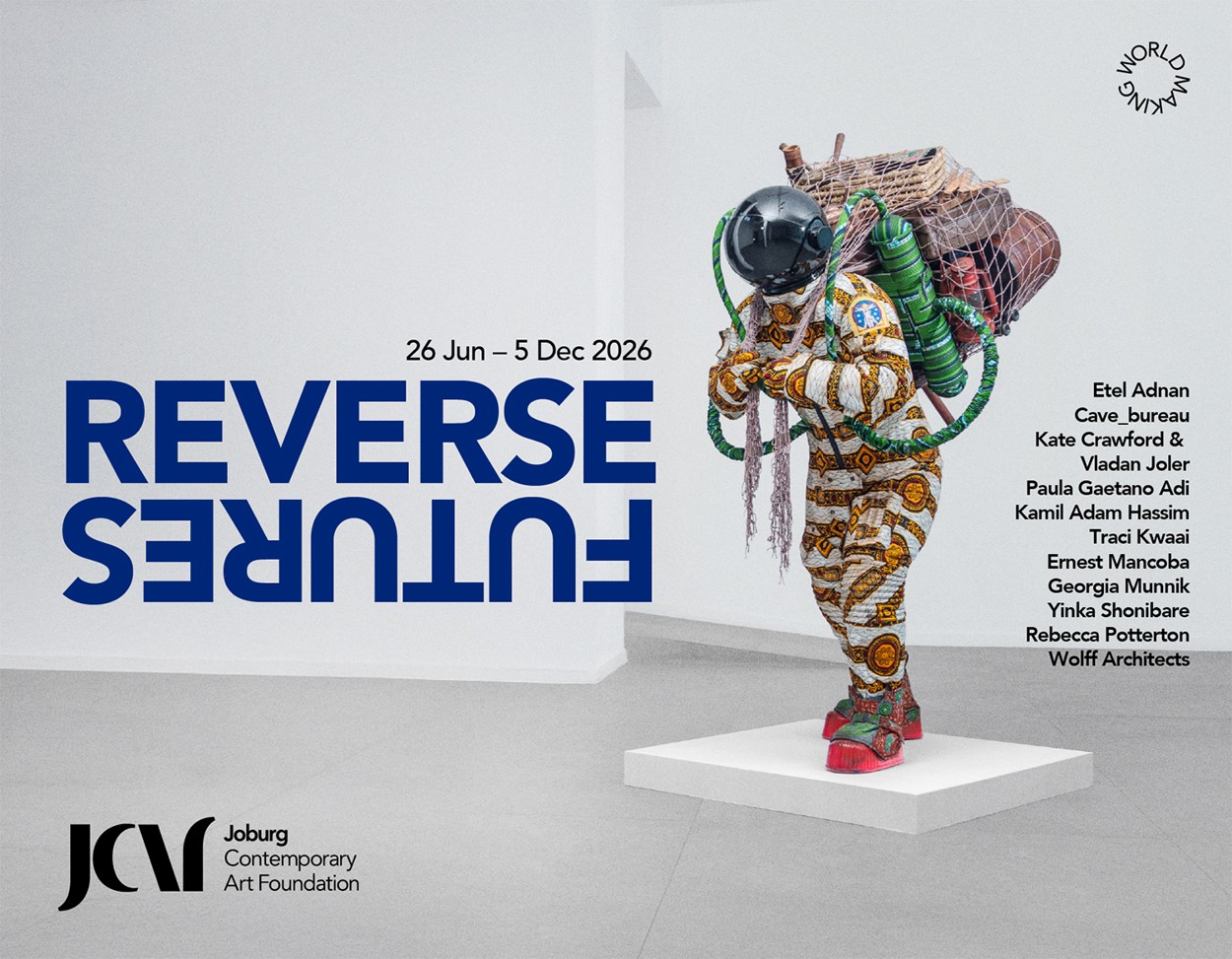
I had a sneak preview of JCAF’s 2026 exhibition, Reverse Futures before it opened on 26th June. With head still spinning trying to process the information – visual, verbal and conceptual- a friend asked “what it was about” this year? I tried to be as succinct as possible (a challenge for me), and suggested that it speaks to ways of thinking about technology and different realities (both spatial and historical) but from a different perspective. A perspective from the Global South which suggests an alternative to the traditional role of technology which has historically and currently been in the service of progress, expansion, warfare, surveillance, extraction, colonization, subjugation, etc. Put another way … it speaks to an attempt to decolonize technology and uncouple it from current ways in which technology makes us think, act, and be in the world.
JCAF Research themes
JCAF chooses a topic every three years which it explores through an annual exhibition. Three exhibitions were shown under the umbrella of JCAF’s first research theme, Female Identities in the Global South:
- Contemporary Female Identities in the Global South 2020-2021
- Liminal Identities in the Global South 2021-2022
- Modernist Identities in the Global South 2022-2023
Reverse Futures is the final exhibition in JCAF’s three-year Worldmaking research programme, following Ecospheres (2024) about the natural environment and Structures (2025) around the built environment.
Following JCAF’s standard pattern, this exhibition can be viewed via small hour-long pre-booked tours with a guide who helps navigate the exhibition layout, giving a brief context and way of accessing each work. The exhibition space is a dark hallowed space (some spaces are darker than others as you will find out when you experience Kamil Adam Hassim’s chambers of darkness and quiet). Nine works comprising 2 small paintings, installations with videos, a sculpture, a virtual reality video, are arranged in three sections: Space, Time and Place. Several of the installations are conceptually dense even opaque, so there’s an initial cognitive overload and it would be quite useful to have a little background before visiting.
Calculating Empires – five centuries of technology systems
After entering the gallery, visitors require the usual reorientation to the quiet darkened space demanding reverence and respectful quiet, before engaging with the large scale 24 m long 3m high installation on the left wall. Entitled Calculating Empires: a genealogy of Technology and Power since 1500 by Kate Crawford and Vladan Joler, this massive diagram maps the 5-century trajectory of technological systems, surfacing how they have been used in the service of power and control: colonization, militarization and automation.
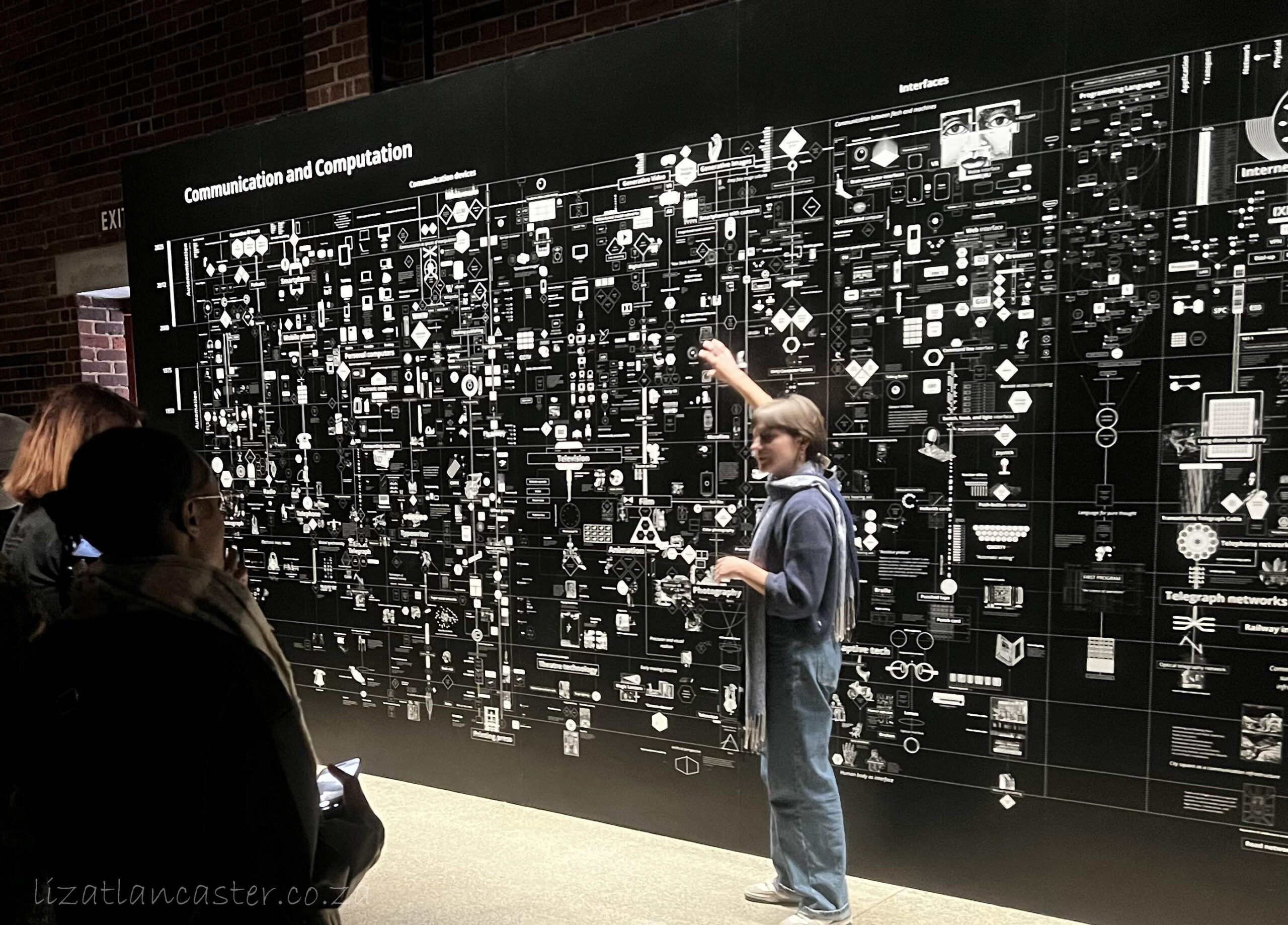
This is overwhelming .. even given loads of time to absorb. Read horizontally in groups of technology types, it is also read vertically in historical time periods.
Where have we been? Where are we now? Where are we going? And what are the connections between past, present and future?
It is against this manifesto that the rest of the works on exhibition can be interpreted for it offers a way of calculating the technological present through the lens of the past. But in asking how we got here it also considers where we might be going and it is to this that the rest of the exhibition speaks, as the seemingly oxymoron of the title Reverse Futures suggests. Instead of imagining the future as a clean break from the past, the exhibition imagines ideas about the future emerging through inherited memories, colonial histories, migration and indigenous systems of knowledge, making past and future mutually constitutive.
Reverse Futures: the title of the exhibition
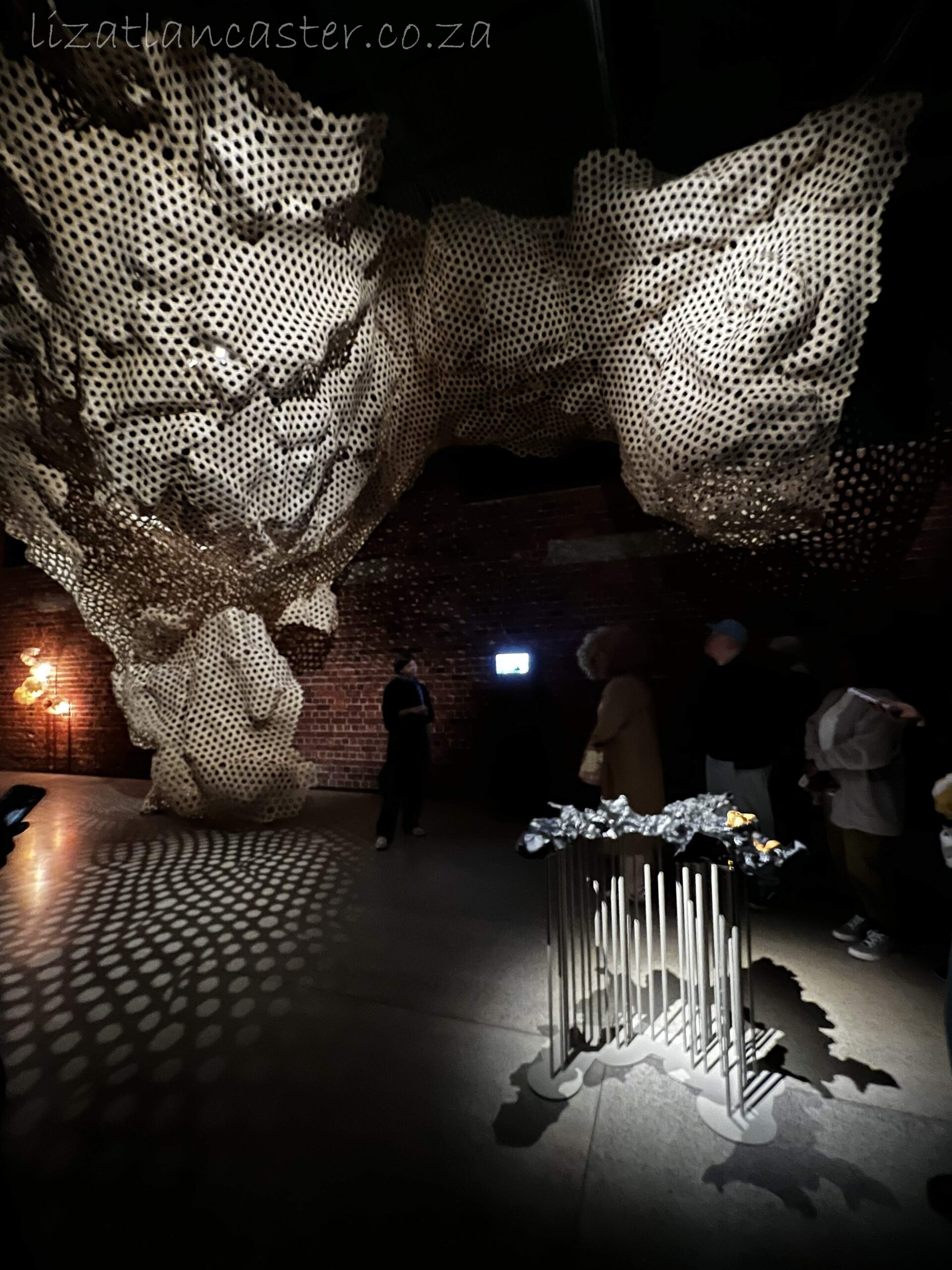
For this we need to turn to the installation Shimoni Slave Cave 2022 – 2023 by Cave_bureau, a Nairobi-based architectural research collective and design practice founded in 2014 by Kabage Karanja and Stella Mutegi. Combining architecture, geology, anthropology, and decolonial thinking they investigate how landscapes—especially caves—shape histories, cultures, and possible futures. “Each project iterates their notion of ‘reverse futurism’, the understanding that for a future to exist we need to undo the mistakes of the past. In this sense, Cave’s work advocates for conceptual imaginary leaps as much as it does legislative changes or new architectural realities.”
Cave_bureau is best known for The Anthropocene Museum, an evolving research platform that combines exhibitions, installations, fieldwork, and built interventions. rather than focusing only on conventional buildings.
Shimoni Slave Cave
This work formed part of the exhibition Geology of Britannic Repair for the British Pavilion at the 2025 Venice Architecture Biennale. Shimoni slave caves on the coast of Kenya, is a site where 18th-century East Africans were chained to the walls while awaiting transport to Zanzibar’s slave markets. Today, these cave networks are silted up, leaving nothing but archaeological evidence of this past trauma. Cave_bureau made three-dimensional laser scans of what could be accessed which they turned into digital drawings.
Guanaquerx 2024
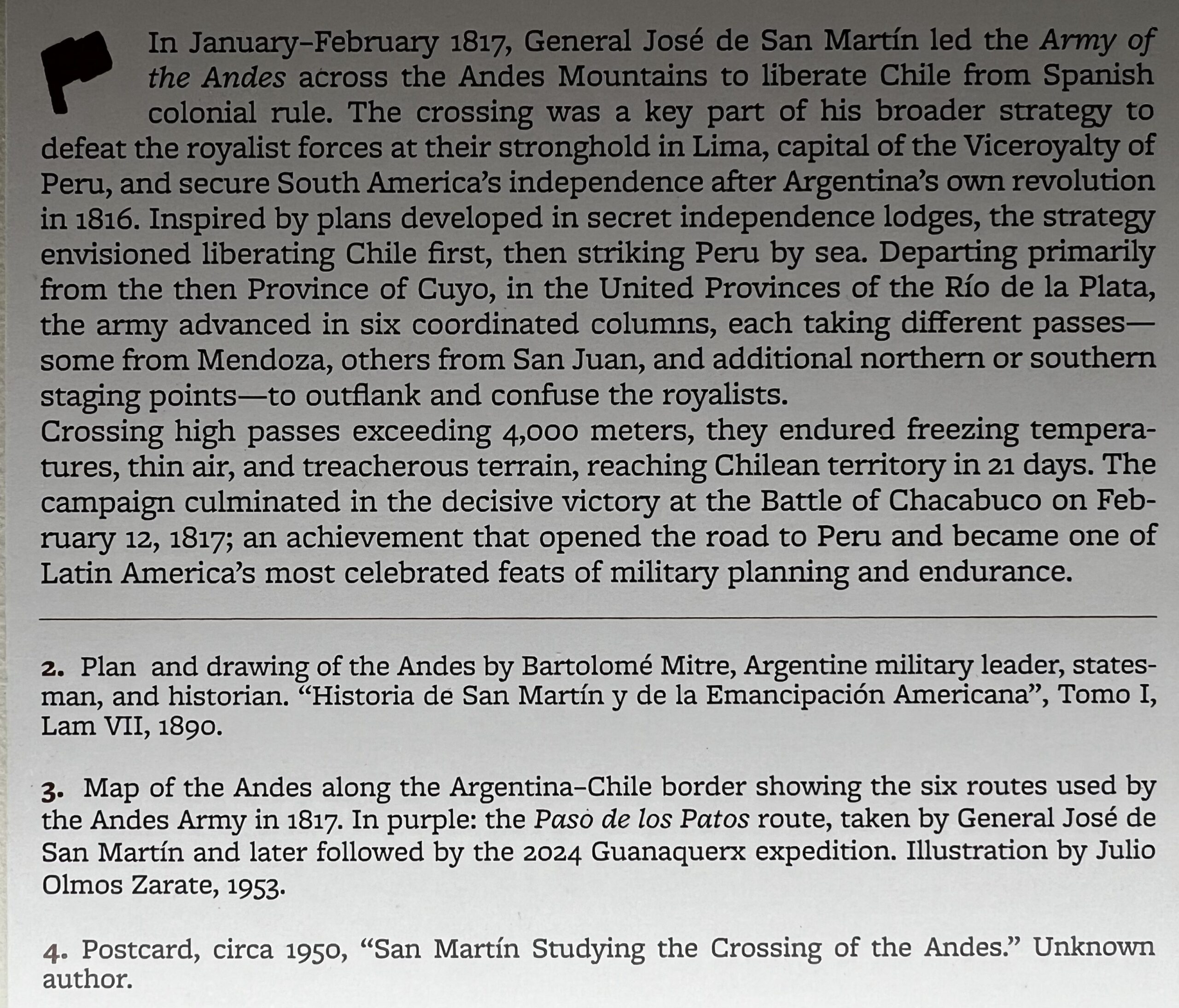
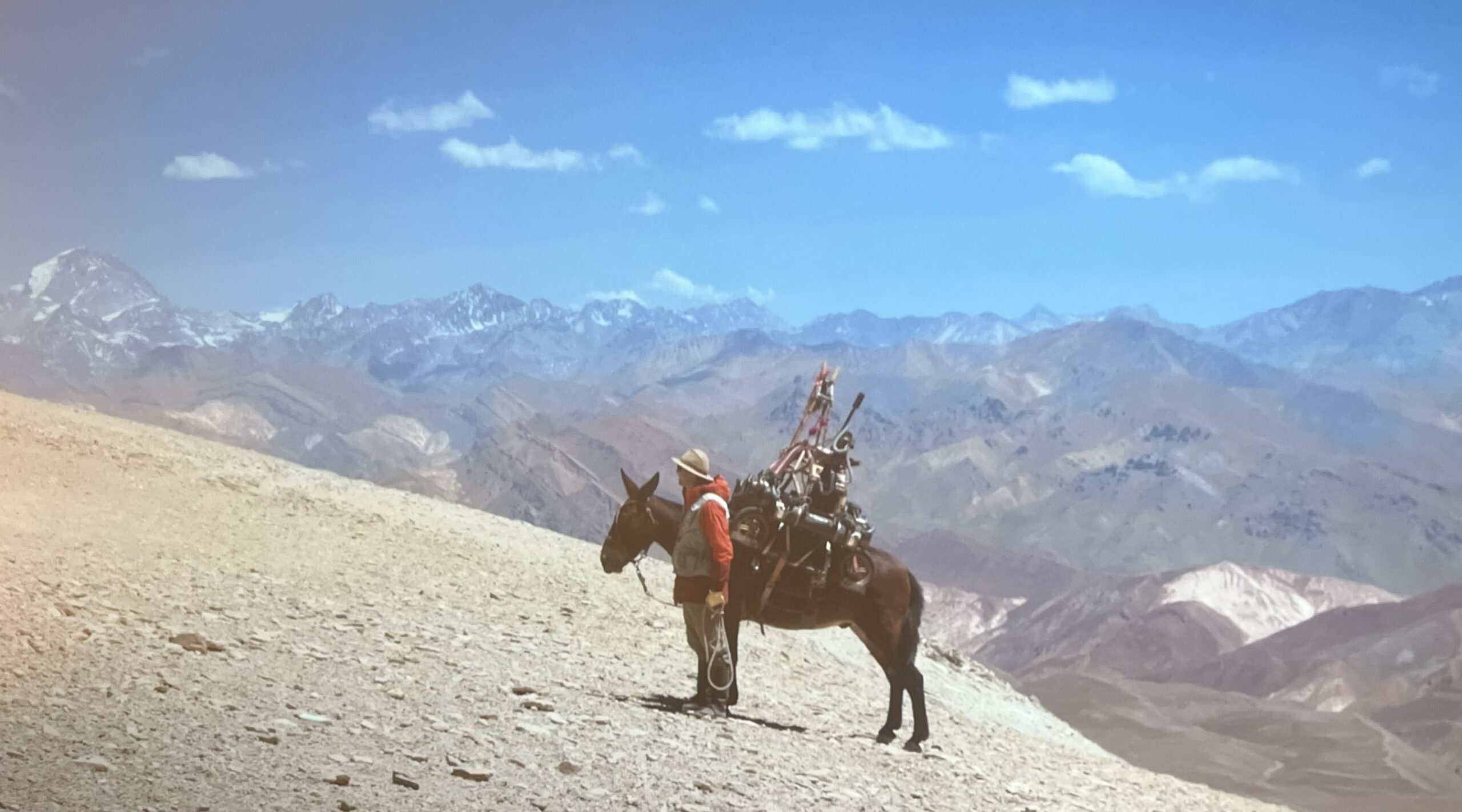
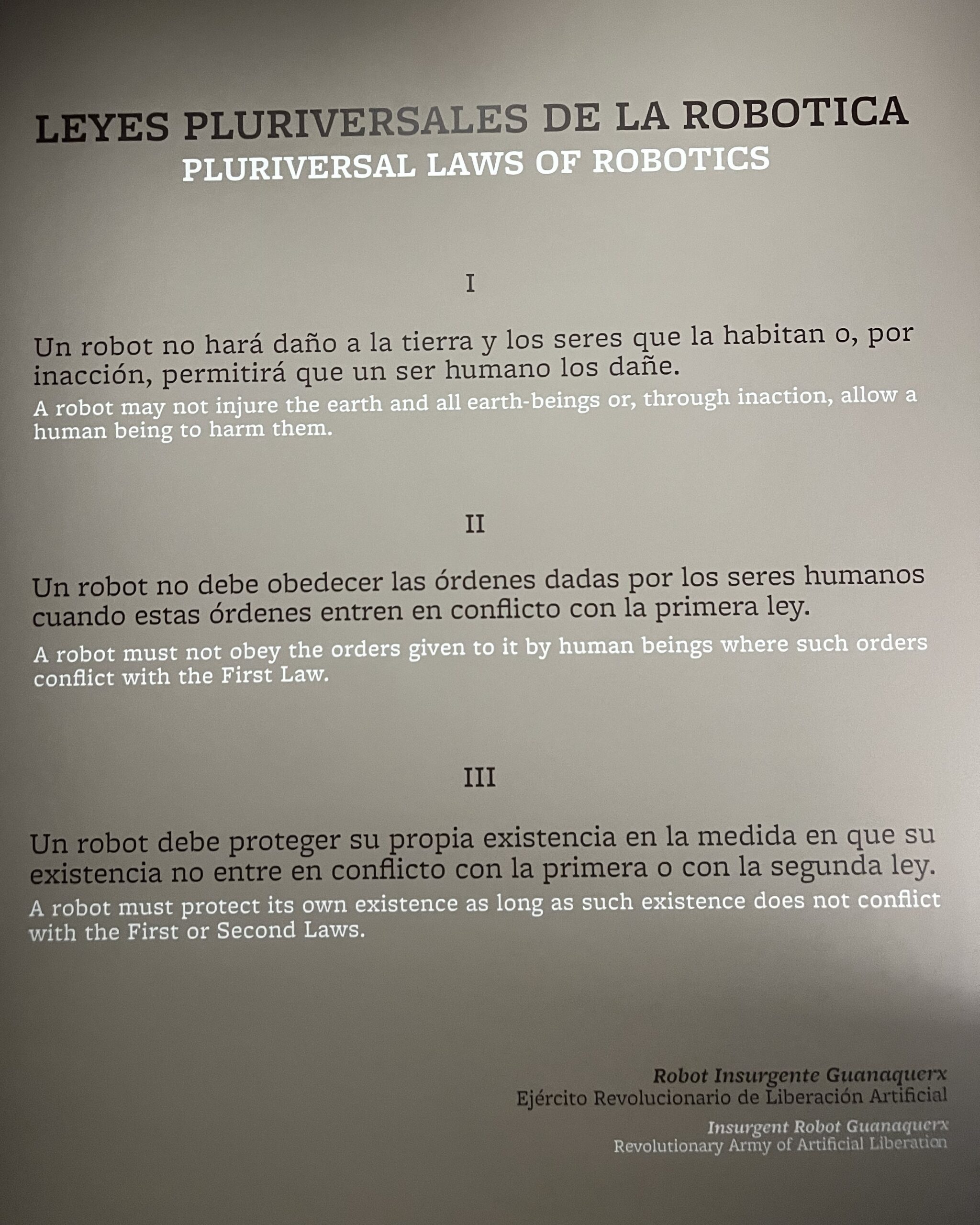
And then there is the darling of the exhibition – the Guanaquerx. The rationale behind the choice of works for this exhibition is complex and several of the installations are conceptually dense even opaque, so there’s an initial cognitive overload. However, in the case of Gaetano Adi’s charming robot, it’s easy to respond to the delightful naiveté of this animal whose strange somewhat strangulated mechanical calls echo through the space as the guide is talking.
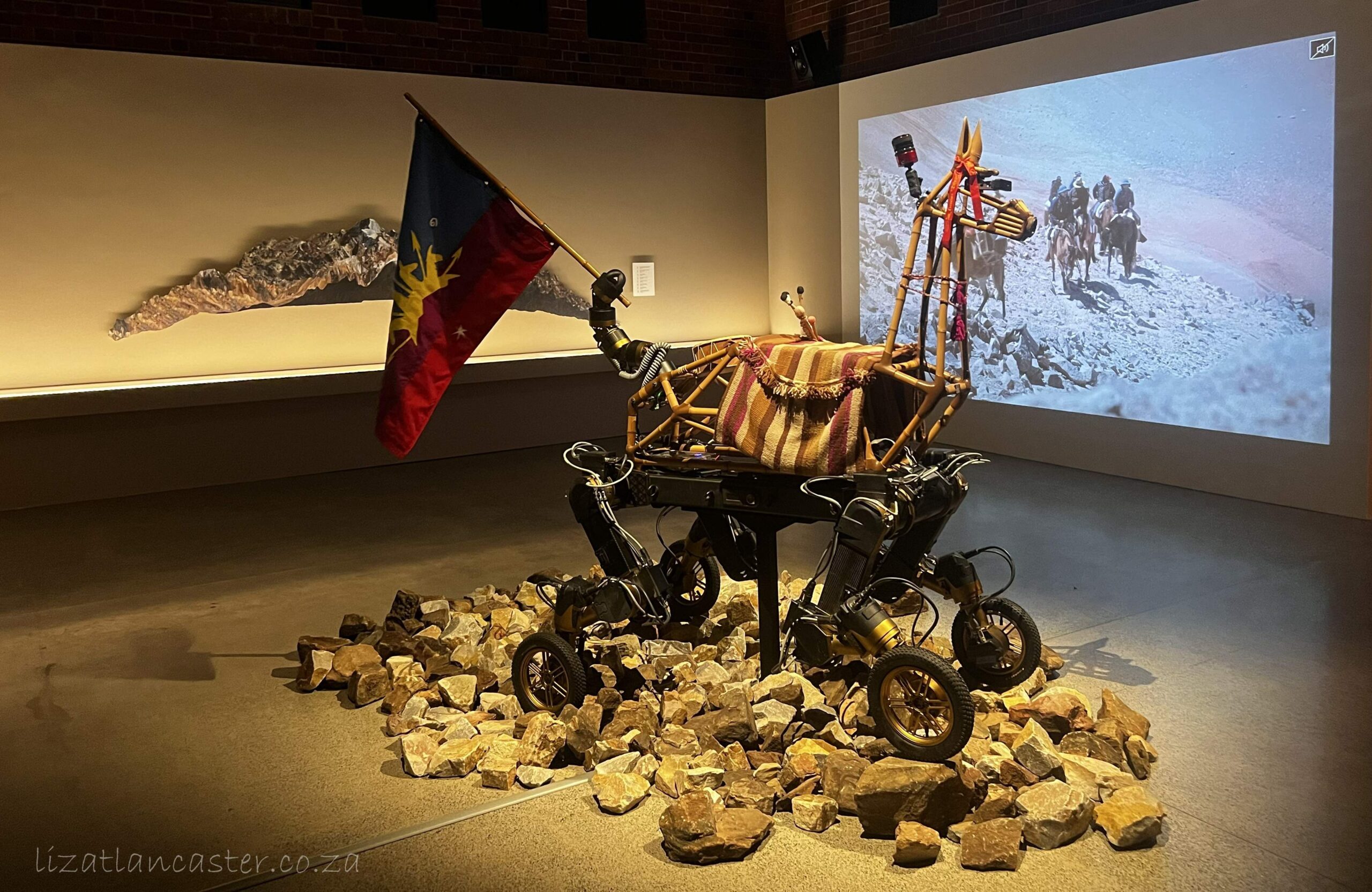
Paula Gaetano Adi is an Argentine-born interdisciplinary artist, researcher, and educator whose work combines robotics, sculpture, video, and performance. Rather than treating robots as purely functional tools, she sees them as cultural and political actors who are part of an emancipatory technological practice. So our little robotic guanaco was the first robot to cross the Andes but in doing so he poetically restaged José de San Martin’s 1817 crossing of the Andes that brought the liberation of Argentina, Chile, and Perú from Spanish colonizers.
Allocate extra time after the exhibition walkabout
After the exhibition walkabout you will be able to revisit the videos; read the research material; experience Hassim’s dark booths, Munnik’s olfactory work and Tracy Kwaai’s magical underwater fishermen’s narratives. And of course, the small but weighty paintings by Etel Adnan and Ernest Mancoba. So make sure that you reserve the time to do that. Otherwise you will need to revisit which might be no bad thing given the amount of information to absorb.
All tours are free and there are 3 tour slots a day: 11 am, 1 pm and 3 pm. These tours book up fast so make sure to book well in advance. And perhaps most exciting of all, there are special tours for youngsters.
For an even more extensive review see Johannesburg In Your Pocket